
All on 4 Dental Implants
22
/
06
/
26
by david dunn


If you’re facing the possibility of losing your teeth, or already struggling with loose dentures, you’re probably wondering what your real options are. The All-on-4 procedure offers a way to replace a full set of teeth with just four implants, creating a fixed smile designed for stability, comfort, and confidence.
This guide walks you through the entire process, including how the procedure works, what makes the newer Next Gen approach different, what recovery is like, and what it may cost, so you can understand exactly what to expect before taking the next step.
All-on-4 dental implants are a full-arch teeth replacement solution for people who have lost (or are about to lose) most or all of their teeth. The All-on-4 procedure uses four titanium implants in the upper or lower jaw to hold a fixed, non-removable dental bridge. The rear implants are usually angled to maximise contact with available bone, which can help improve stability and may reduce the need for bone grafting in suitable patients.
Before All-on-4 was developed, full mouth implant treatments often required more implants, longer healing times, and invasive bone grafting, with patients having to wear removable dentures for several months before permanent teeth could be placed.
With All-on-4, temporary teeth can be fitted soon after surgery, which may reduce overall treatment time for suitable patients.
And while standard All-on-4 is still effective, modern technology has led to an upgrade: All-on-4 Next Gen, designed for a more seamless, lifelike look and feel.
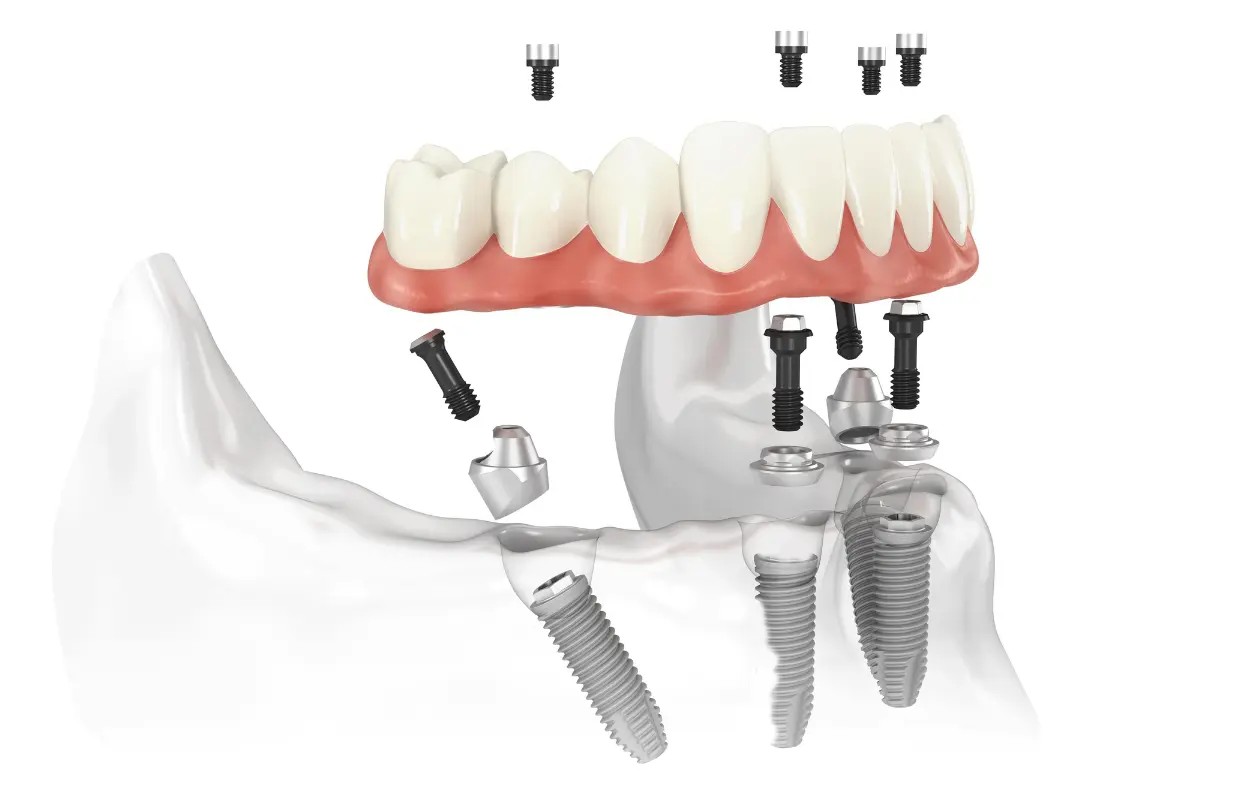
All-on-4 Next Gen takes everything that works in standard All-on-4 and improves it.
Instead of replacing both teeth and gums, Next Gen replaces only the teeth, preserving your natural gum line wherever possible. Preserving the natural gum line not only enhances aesthetics but also supports better oral function and tissue health. This creates a smile that looks and feels more natural, while blending seamlessly with your face.
Advanced CAD/CAM technology is used to manufacture teeth that closely replicate natural teeth, ensuring a precise fit and lifelike appearance.
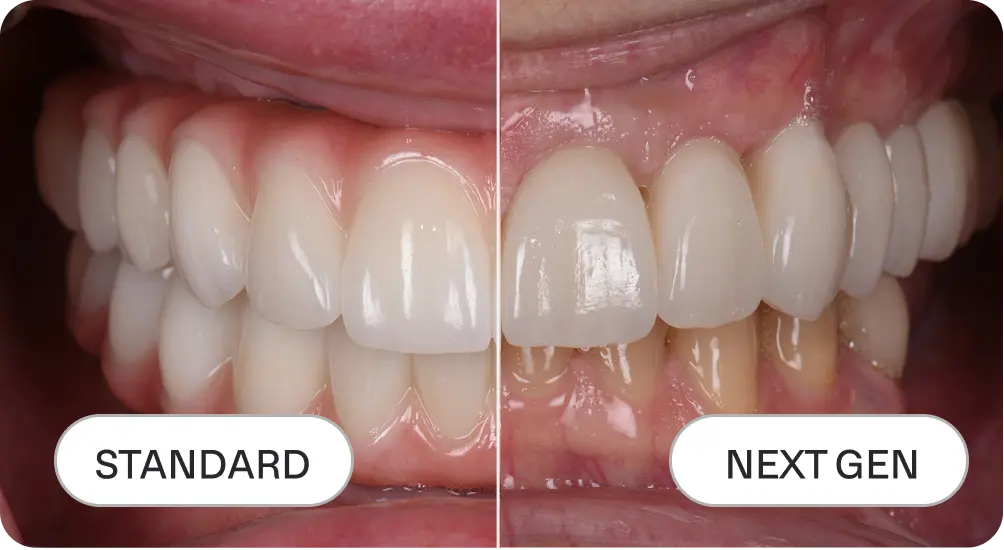
The All-on-4 technique is suitable for both upper and lower teeth, with special consideration given to the lower teeth to maximize bone support and avoid nerve interference for optimal, long-lasting results.
The success of your All-on-4 treatment (whether standard or Next Gen) starts with a thorough consultation and detailed planning.
During your consult, Dr Dunn and our team will:
If you decide to proceed, we take detailed records like, intraoral scans, photos, facial videos and bite analysis. We use these to plan where the implants go and design a smile that fits your face and features.
We perform your procedure under IV sedation (twilight sedation) with a medical doctor with additional training in sedation treatment, so you feel relaxed and comfortable during treatment. Using advanced guided technology such as X-Guide, we place implants with exceptional accuracy, and remove any remaining damaged or decayed teeth, if needed. For upper jaw implants, the position is carefully planned to avoid the sinus cavities.
Next Gen patients typically receive same-day temporary teeth, made and adjusted with FastMap photogrammetry while they’re still in the chair.
Standard All-on-4 patients may receive their temporary teeth within a few days, depending on their case and treatment plan.
After surgery, you’ll spend around 30-45 minutes in recovery, and you’ll need someone to take you home.
For a standard All-on-4, once your temporary bridge is ready, you’ll come in to try a 3D-printed version. This lets us check the fit, comfort, bite and aesthetics. Temporary bridges are often made from acrylic teeth, which are softer and may need to be replaced after a few years. After any final adjustments, we secure your temporary bridge to your implants. You’ll also get clear aftercare instructions for healing.
Over the next 4–6 months, your implants integrate with the bone as your mouth heals.
Next Gen patients: your same-day teeth are refined over the first 12 weeks to support healing and help shape the gumline. Your final ceramic bridge is usually fitted around six months.
Standard All-on-4 patients: your temporary bridge is worn during healing, then replaced with the final bridge once your implants are fully integrated.
Implant placement for a standard All-on-4 typically takes around 3-4 hours per jaw. The Next Gen procedure usually takes less time. If any remaining teeth need to be removed, this is usually done during the same procedure.
Temporary teeth may be fitted on the same day or shortly after surgery for suitable patients.The healing and integration period usually takes 4–6 months, after which the final bridge is attached.
Many patients resume normal daily activities within 10–14 days, although mild swelling or discomfort can occur during the first few days.
All-on-4 cost can vary from around $20,000 to more than $40,000. The cost of All-on-4 (whether standard or Next Gen) varies for each patient because everyone’s jaw, treatment plan, and goals are different.
Factors that affect the price include:
After your free consultation and 3D assessment, we give you a clear, personalised treatment plan and a detailed cost breakdown. You’ll know exactly what’s involved before you start.
It's worth remembering that the cheapest All on 4 dental implants in Sydney isn't always the best value over time — we recommend comparing what's included, the experience of your treating dentist, and the materials used before making a decision. Reading All on 4 reviews can also help you when comparing your options.
If cost is a concern, we offer payment plan options to spread out the cost of treatment over time. Some patients may also choose to explore the compassionate release of superannuation*, which may be available to eligible patients in limited circumstances.
*Compassionate release of superannuation for medical treatment is available only in limited circumstances and should be considered a last resort. Eligibility is subject to ATO assessment. Early access to superannuation may have significant financial implications including impacts on retirement savings, taxation, and government benefits. This does not constitute financial advice. We recommend speaking with a licensed financial adviser and referring to ATO guidance before making any decision.
{{mid-cta}}
Like any dental treatment, All-on-4 implants have advantages and considerations.
Suitability and outcomes depend on individual health, anatomy, and oral hygiene practice.
Recovery after All-on-4 dental implant surgery is often quicker than expected, with most patients resuming normal activities within 10 to 14 days.
It's normal to experience some discomfort, bruising and mild swelling for a few days after All on four surgery, but this can be easily managed with over-the-counter pain medication.
During your recovery, it's crucial that you follow the clear aftercare and All on 4 cleaning instructions provided by your dentist.
We recommend taking things easy by doing the following:
After your All-on-4 dental implants are placed, ongoing follow-up appointments are essential to ensure your new teeth remain healthy and functional. Typically, your dentist will schedule check-ups at 4–6 weeks and again at 3–6 months after implant surgery. During these visits, the dentist will assess the healing of your implants, make any necessary adjustments to your bite, and provide guidance on maintaining excellent oral hygiene.
Proper care is key to the long-term success of your All-on-4 implants. Patients should brush and floss their new teeth daily, just as they would with natural teeth, and attend regular dental check-ups to monitor oral health. These follow-up appointments allow your dentist to catch any potential issues early and help you maintain a natural smile and optimal oral health for years to come. With the right care and regular follow-up, All-on-4 dental implants can provide a permanent solution for missing teeth, restoring both function and confidence.
Dr Dunn has a special interest in dental implant treatment and cosmetic dentistry and has spent over 20 years transforming thousands of smiles with All-on-4.
If you'd like to discuss the treatment procedure with Dr Dunn in person, you can book a free consultation online or contact us on 02 9247 1394.
Standard All-on-4 replaces both teeth and gums using a fixed bridge. All-on-4 Next Gen aims to replace only the teeth, preserving more natural gum and bone tissue. This can allow for a slimmer bridge design and a more lifelike appearance. Suitability depends on individual anatomy and is assessed during consultation.
For our Next Gen bridge restorations, we use the ICE zirconia ceramic system by Zirkonzahn. This high-strength, all-ceramic material allows for a thinner yet durable bridge without a titanium framework. Each bridge is custom-contoured to match your gumline and anatomy, offering a more natural feel and appearance compared with bulkier alternatives.
For people needing to replace a full arch of teeth, All-on-4 is widely considered a worthwhile long-term solution. Studies report high satisfaction rates, with around 95% of patients satisfied. As with any medical procedure, suitability and outcomes depend on individual factors, and there are risks and considerations to be aware of. Your dentist will discuss all of this with you during a consultation.
Implant placement for a standard All-on-4 typically takes around 3-4 hours per jaw. The Next Gen procedure usually takes less time. If any remaining teeth need to be removed, this is usually done during the same procedure.
You'll receive local anaesthetic and twilight (IV) sedation to keep you relaxed and comfortable – with little or no memory of the procedure.
As with any surgical procedure, there are risks. Potential complications may include implant failure, infection, nerve injury from improper placement, bridge damage, or issues related to existing health conditions. Choosing an experienced clinician and following aftercare instructions significantly reduces these risks.
All-on-4 dental implants are designed for durability, with many patients seeing them last 20 to 25 years or more with proper care. Individual results vary, and the dental bridge (including Next Gen ceramic designs) may need replacement over time due to normal wear.
Caring for All-on-4 implants is similar to caring for natural teeth. This includes brushing twice daily, cleaning around the bridge, and attending regular professional check-ups. Once healing is complete and your final bridge is fitted, most patients can eat and chew normally.
.webp)

